
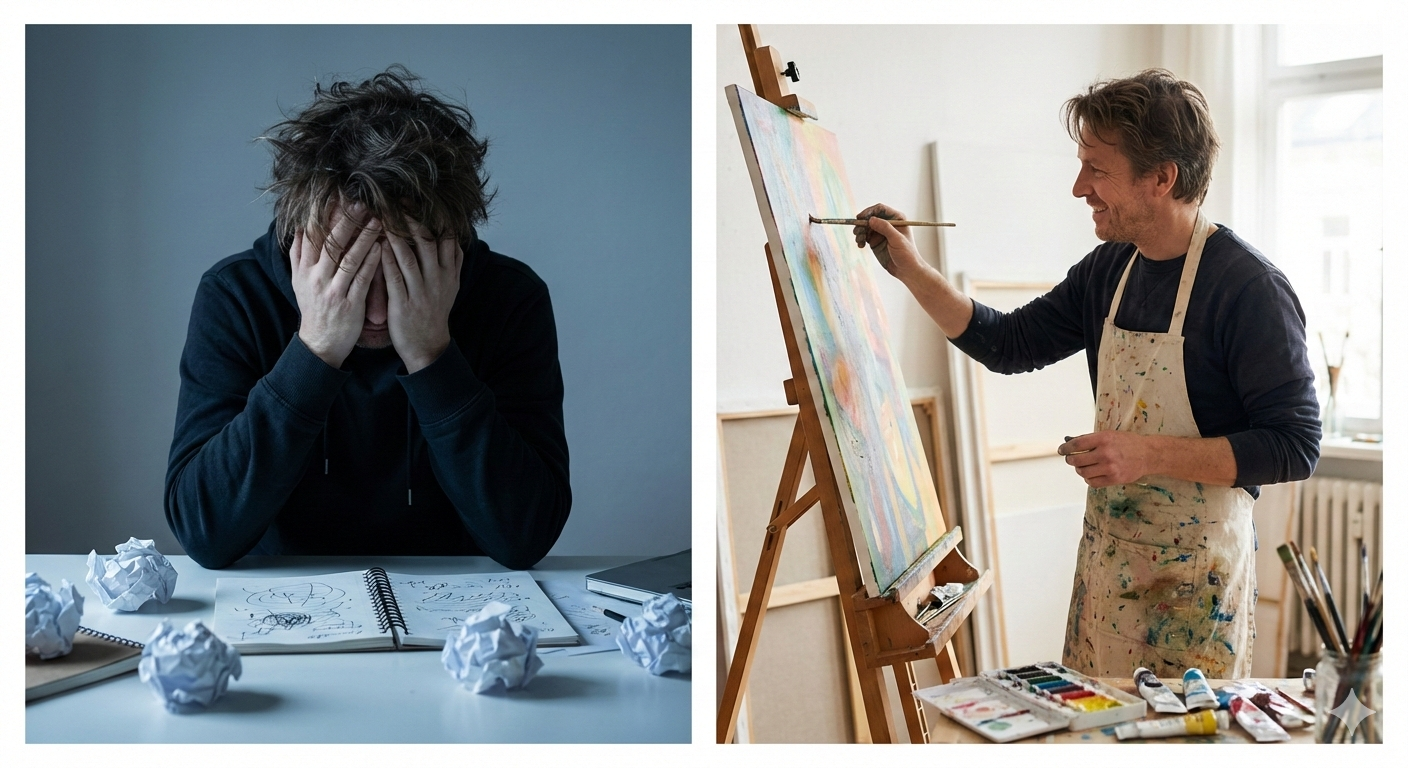
The biggest question haunting every studio, from beginners to masters, is usually the same: “Is my art good enough?”
We often think becoming a “successful artist” is about adding things: adding more skills, more connections, or more expensive materials.
But often, true growth happens through subtraction.
Research into the psychology of artists shows that sustained creativity isn’t about eliminating doubt. It’s about changing your relationship with it. Successful artists haven’t magically stopped feeling insecure; they have just learned to stop carrying unnecessary mental weight.
To build a resilient, fulfilling creative life, you need to travel lighter. Here are 9 things successful artists give up to make room for real growth.
1. The Belief That They Are “Frauds” (Imposter Syndrome)
Many high-achieving artists suffer from Imposter Phenomenon. Even after a big sale or a successful exhibition, they feel like they just got lucky and are waiting to be “found out.”
What they give up: The idea that they don’t belong in the room. They learn to accept that their achievements are real evidence of their skill, not just luck.
2. The Demand for Instant Perfection
Perfectionism is a trap. It sets an impossible standard that guarantees failure before you even begin. The energy you spend beating yourself up for not being “flawless” is energy stolen from creating.
What they give up: The need for the first draft to be the final draft. They embrace the messy, ugly stages of the creative process as necessary steps, not failures.
3. Comparing Their “Behind-the-Scenes” to Someone Else’s “Highlight Reel”
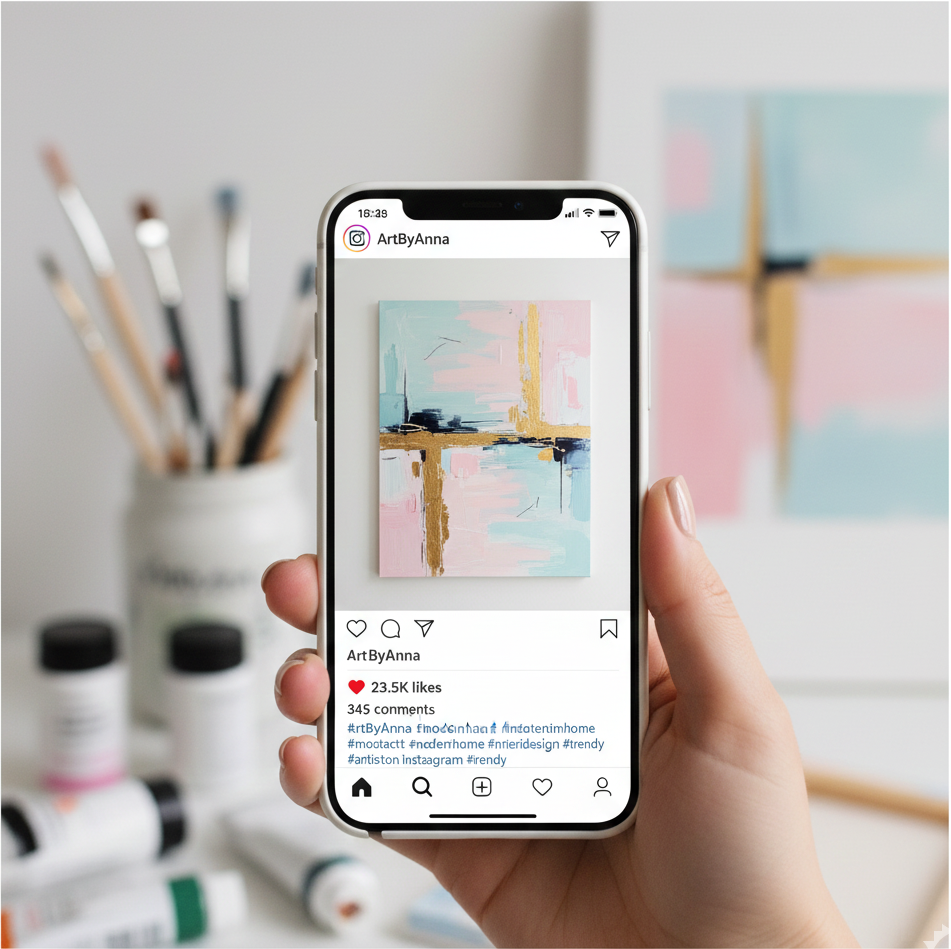
Social media is built for unfair comparisons. You look at your messy studio and failed sketches, then scroll through another artist’s perfectly curated, edited final products online. This gap makes you feel inadequate.
What they give up: Upward social comparison. Successful artists know that Instagram is a gallery wall, not a realistic documentary of the creative struggle.
4. Relying on “Likes” for Self-Worth
This is the big one. When you rely on algorithms and engagement metrics to tell you if your work is good, you hand your self-esteem over to a machine. The pressure to go “viral” can make you chase trends instead of your true calling.
What they give up: The need for external validation systems to define their value. They shift their focus from “Will others like this?” to “Am I developing as an artist?”
5. Chasing Trends Instead of Their Own Voice
The pressure to be popular can lead to the homogenization of art—where everyone starts painting the same things because that’s what the algorithm favors right now.
What they give up: Sacrificing authenticity for visibility. Successful artists know that lasting value comes from their unique perspective, not from copying what’s currently hot.
6. Confusing Financial Success with Artistic Value
The art market is volatile. It often treats art as a financial commodity rather than a communicative tool. If you believe that high prices equal high quality, a period of low sales can feel like an existential failure.
What they give up: Letting the market dictate their worth. They learn to separate their business outcomes from their personal value as creators.
7. The Goal of Pleasing Everyone
Science shows that aesthetic appreciation is highly subjective; it’s tied to unique brain chemistry and personal history. Trying to make art that everyone loves is biologically impossible.
What they give up: The futile attempt to control the viewer’s reaction. They focus on connecting deeply with the right audience, rather than blandly pleasing every audience.
8. Ignoring Their Own Growth
When you are obsessed with the final product, you forget to look at how far you’ve come. The inner critic loves to make you feel stagnant.
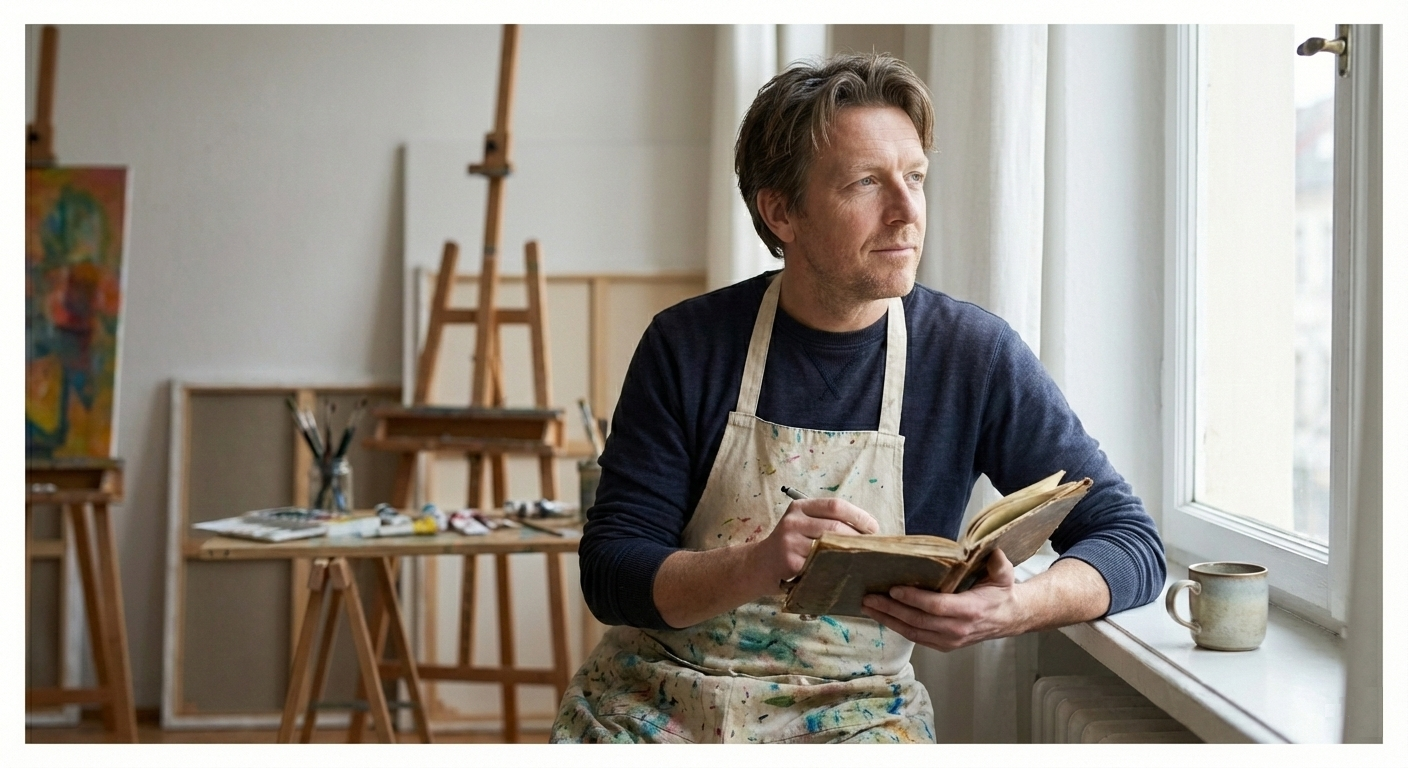
What they give up: Focusing solely on the destination. Successful artists document their process (keeping old sketchbooks, etc.) to have tangible proof of their own development over time.
9. The Fear of Uncertainty
If you only create when you feel 100% confident, you will rarely create anything new. Uncertainty isn’t a sign of incompetence; it’s a necessary companion to making art.
What they give up: The need to know exactly how a piece will turn out before they start. They reframe anxiety as excitement and view setbacks as data for their next project, not as personal failures.
Conclusion: Moving to Internal Metrics
Giving up these nine burdens doesn’t happen overnight. It is a continuous process of cognitive restructuring, retraining your brain.
The shift that successful artists make is moving away from unreliable external metrics (likes, sales, universal praise) toward sustainable internal metrics (effort, development, and the transformative power of the work itself).
Your art is “good enough” if it is honest, if it helps you grow, and if it communicates something real. That is a standard worth chasing.









Add a comment